


EMATM Foundation
The new headquarters for the Emily Mason and Alice Trumbull Mason Foundation transforms a former printing facility in New York into a working center for preservation, research, exhibition, and daily operations. Dedicated to advancing the legacies of Emily Mason and Alice Trumbull Mason, two important yet historically under-recognized figures in American abstraction, the Foundation required a space capable of supporting multiple overlapping functions: offices, archival work, art handling, workshops, exhibition areas, and climate-controlled storage for its collection.
Founded to preserve and promote the work of Alice Trumbull Mason, and later expanded to include the legacy of her daughter Emily Mason, the Foundation plays an essential role in bringing renewed visibility to two generations of women artists. Alice Trumbull Mason was a pioneering abstractionist and a founding member of American Abstract Artists, while Emily Mason developed a highly personal language of lyrical abstraction, color, and material experimentation over a prolific career. The new headquarters therefore had to operate not simply as an office, but as an active instrument for stewardship: a place where artworks could be studied, packed, archived, exhibited, and protected.
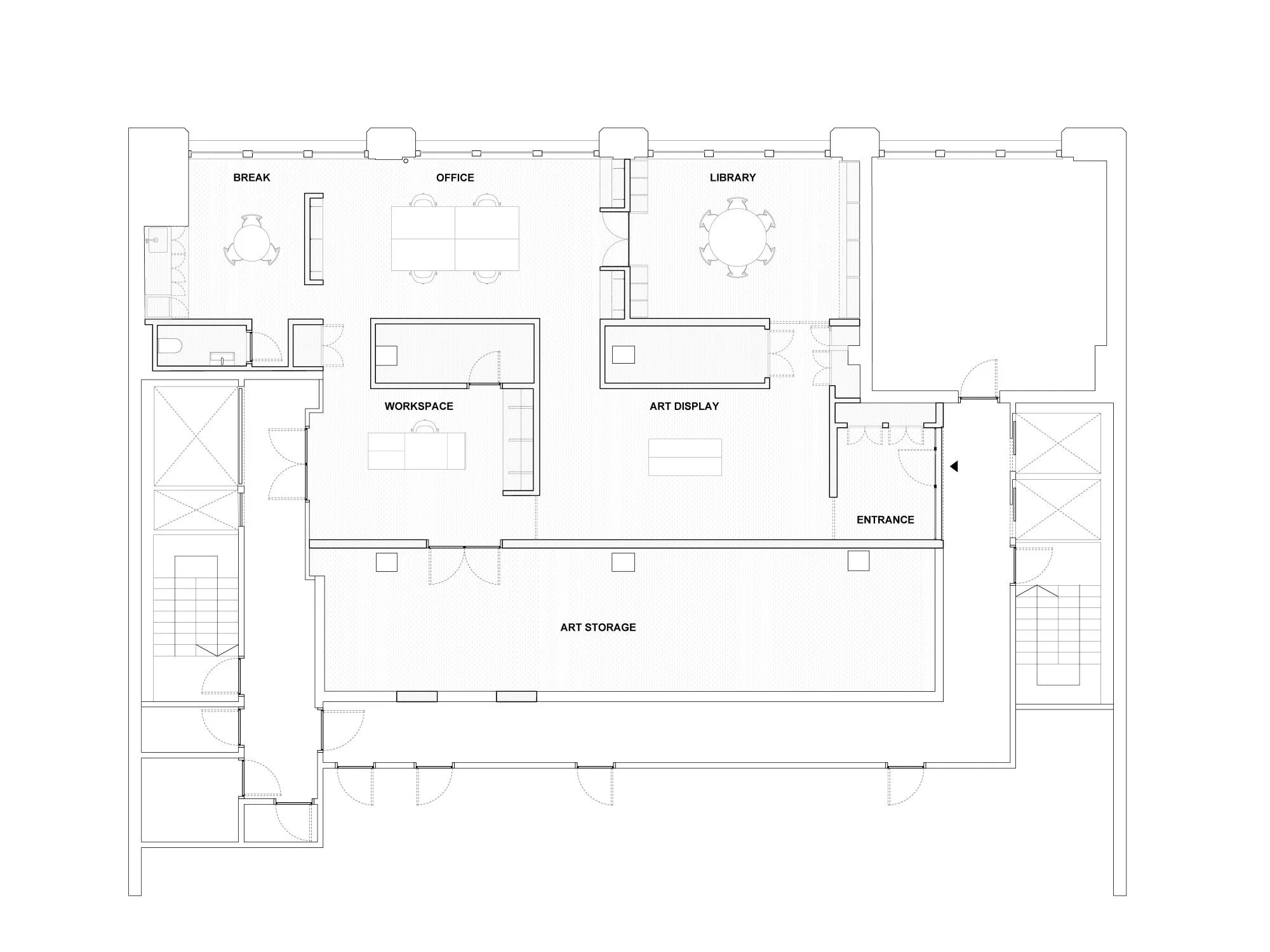
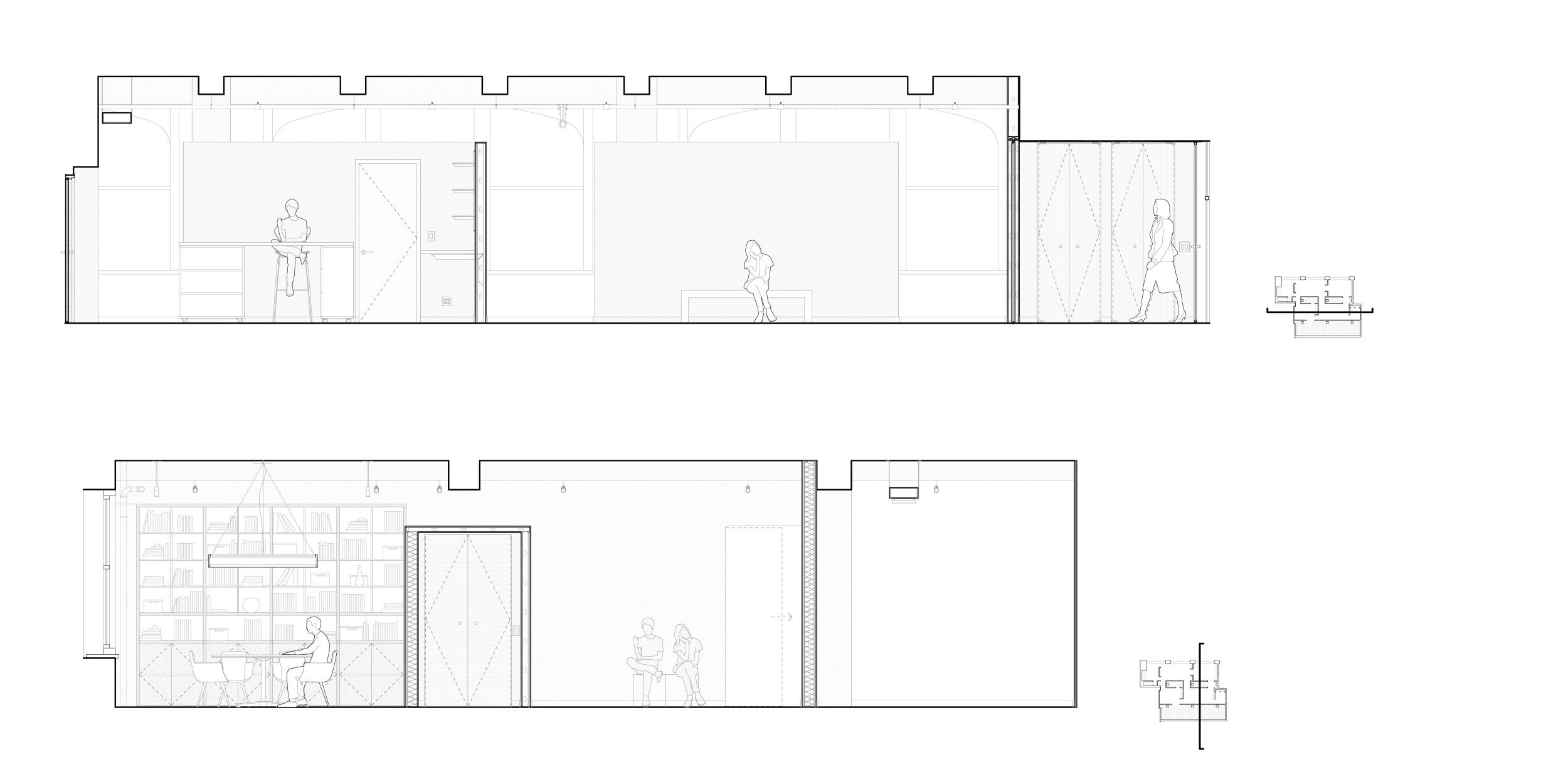
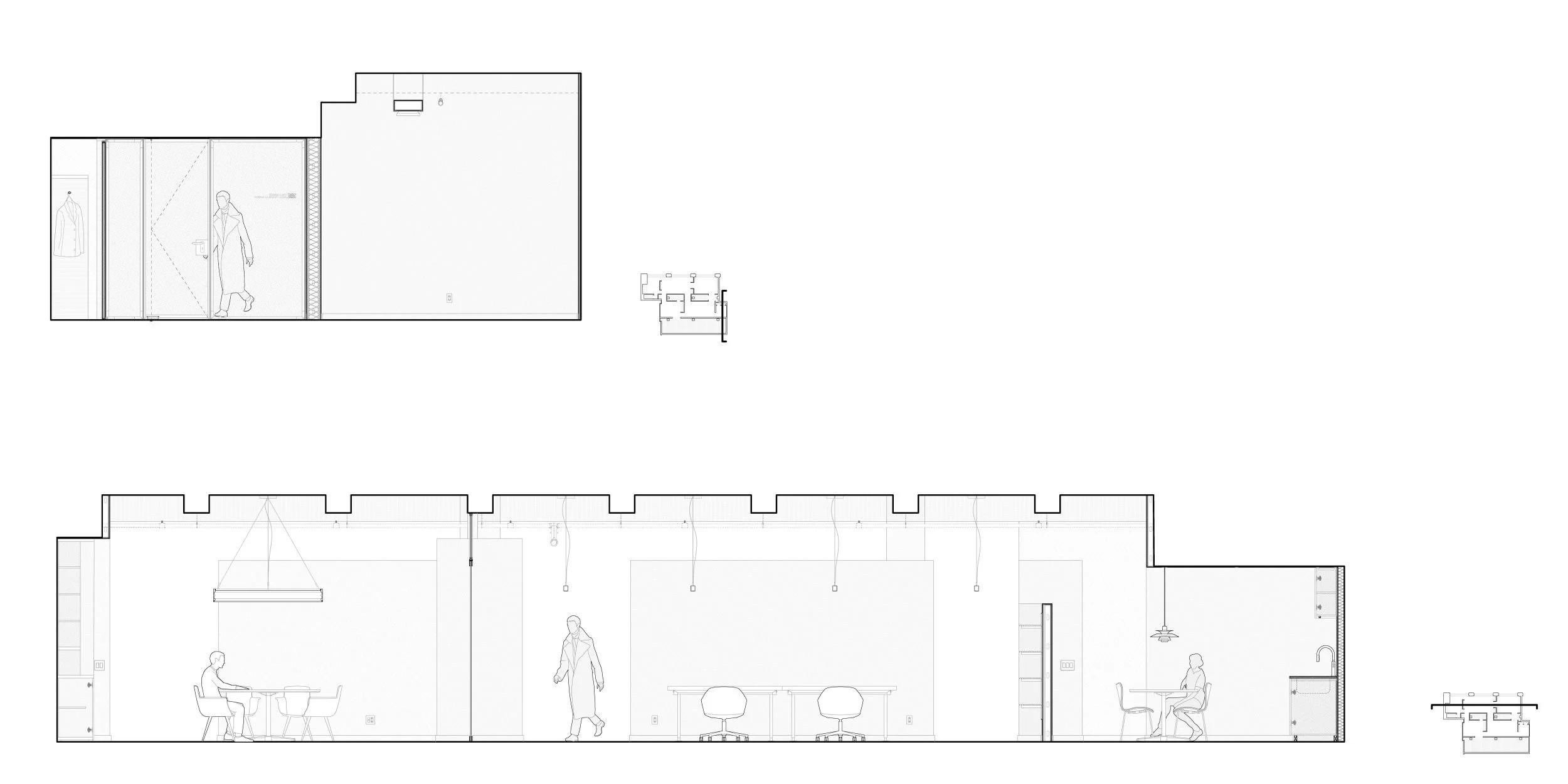
The arrival sequence was conceived as an important part of the project. A new glass frontage creates a generous transitional vestibule between the building’s common corridor, elevators, and the Foundation’s interior spaces. Rather than entering directly into the working environment, visitors first pass through this buffer zone, which provides privacy, establishes a sense of threshold, and gives the Foundation a more deliberate institutional presence. From this entry space, the sequence gradually opens toward the exhibition area and then continues into the work, archive, and support spaces beyond.
The program is organized around the different rhythms of the Foundation’s work. The most occupied spaces (work areas, meeting zones, break room and archive) are placed along the north-facing façade, where the existing windows provide a steady and even natural light throughout the day. This allows the daily workspaces to benefit from the best environmental qualities of the building while maintaining a clear relationship to the street. More controlled and service-oriented areas, including storage, workshop and collection support spaces, are located deeper within the plan, where light, access, and environmental conditions can be more precisely managed.
A central requirement of the project was the creation of a climate-controlled art storage room capable of safeguarding works from the Foundation’s collection. This introduced a highly technical layer to the design, requiring careful coordination of air conditioning, humidity control, and mechanical equipment. To accommodate the system within the constraints of the existing commercial space, one of the façade openings was strategically used to integrate the exterior mechanical equipment, allowing the storage environment to meet conservation requirements while preserving the clarity of the interior layout.
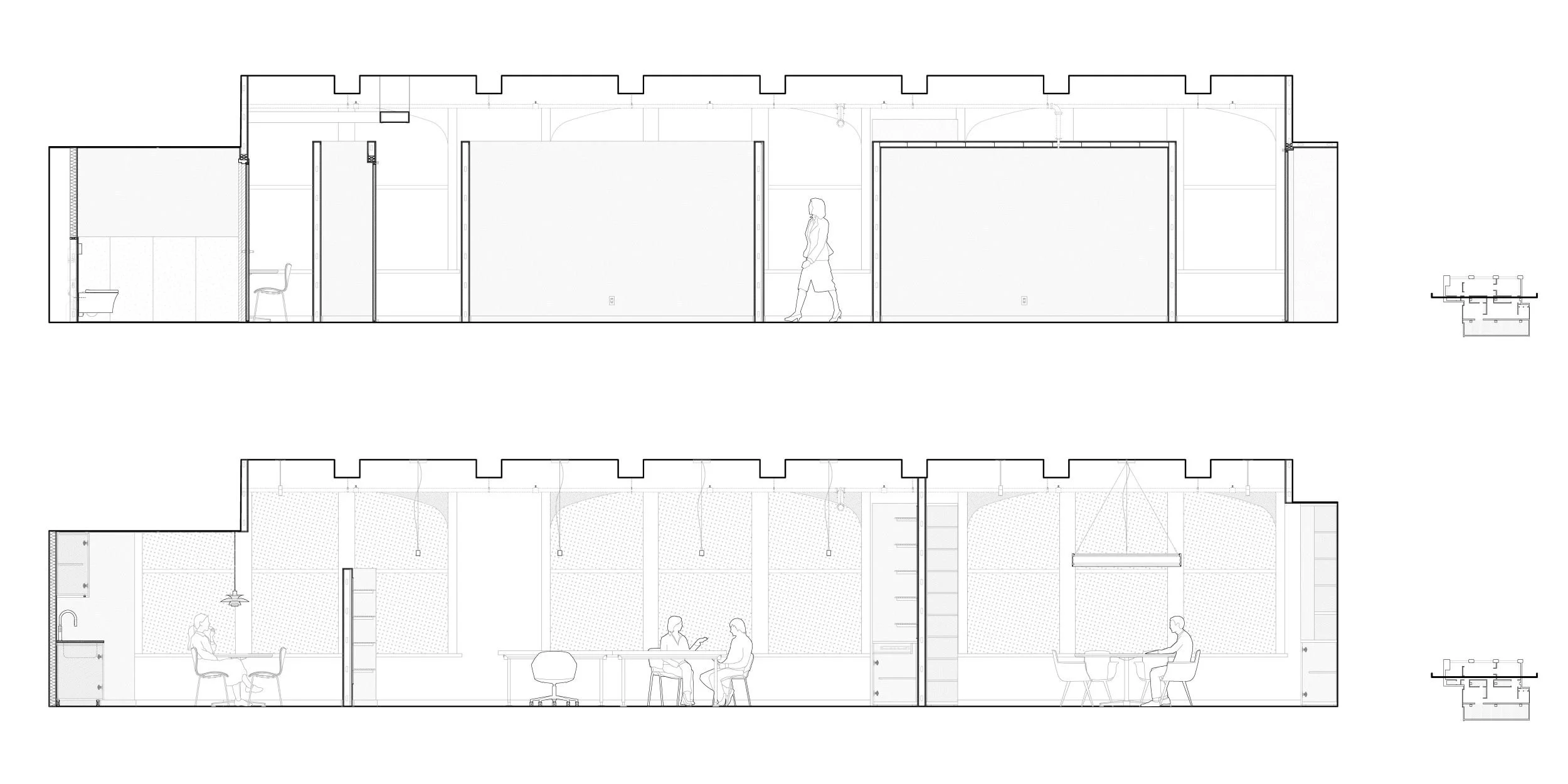
Rather than treating storage as a purely secondary function, the project uses a series of freestanding volumes to organize the plan. These boxes do not reach the ceiling, allowing the original concrete waffle slab structure to remain continuous and visible across the space. At the same time, they provide much-needed storage, define thresholds, and create a gradual sequence from the entrance vestibule toward the more active areas of the Foundation. The result is a workspace that balances openness with control, industrial character with institutional precision, and the everyday needs of a small foundation with the long-term responsibility of preserving an artistic legacy.
Client: EMATM Foundation Architecture: Miguel Quismondo, AIA Team: Javier Rodríguez Izquierdo, Juan Carlos Bragado, Ignacio de Silóniz, William Mulvihill & Javier Nuñez Cuevas Lighting Consultant: Studio ATOMIC MEP Engineering: B2 Engineering D.P.C. Photography: William Mulvihill